Healthcare Provider Earns 193 Top 10 Rankings
Overview
This case study demonstrates how structured, search-first healthcare content earned sustained Top 10 visibility and broad SERP feature inclusion within a competitive YMYL search environment.
I developed a long-form educational resource targeting high-intent, non-branded queries related to calluses and corns. The objective was to capture long-term organic visibility while aligning with medical intent and reinforcing the trust signals required in healthcare search.
Search Strategy
Direct Intent Capture
The headline aligns precisely with high-intent search phrasing. Rather than targeting a broad topic such as “foot care”, the content focuses on a specific actionable problem, increasing relevance across solution-focused queries.
Structured Treatment Ladder
This layered structure captures multiple related query variations within a single resource, enabling broad keyword coverage.
Step-based formatting, concise explanations, and direct subheaders improved eligibility for AI Overview and People Also Ask inclusion.
YMYL Reinforcement
In a high-scrutiny YMYL environment, medical framing, condition-specific risk notes, and formal disclaimer language reinforced trust signals and supported ranking stability.
Embedded Conversion Architecture
Contextual calls to action connect informational traffic to relevant services without disrupting search intent.
Designed for Compounding Growth
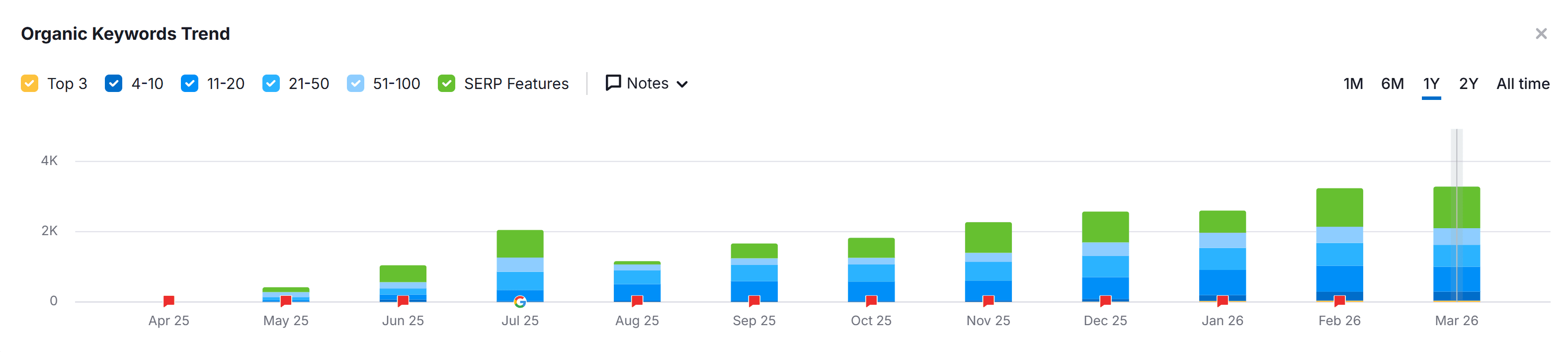
By targeting a full query cluster rather than a single term, the page steadily expanded its ranking footprint over time, resulting in consistent Top 10 coverage and broad SERP feature visibility.
Performance Highlights
The page achieved broad SERP feature visibility through sustained eligibility for AI Overview and People Also Ask inclusion. Structured formatting and direct-response sections supported consistent feature capture across related queries.
Keyword coverage expanded steadily over time, reflecting compounding topical authority within a high-scrutiny YMYL environment.
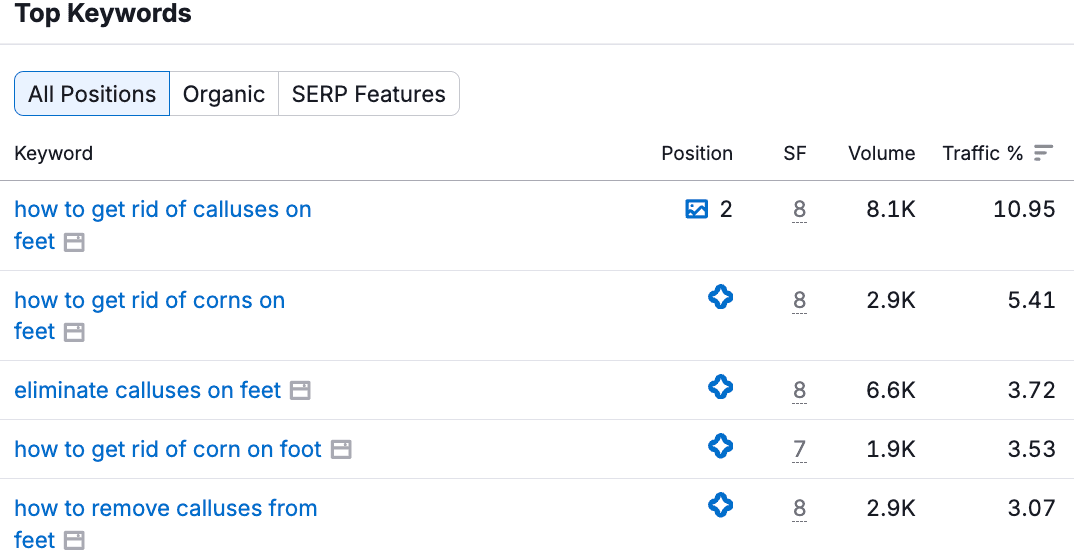
Head terms secured high-visibility positions across queries with meaningful search volume.
Procedural and long-tail variations expanded coverage across treatment-focused search behavior.
Why It Worked
Performance was driven by alignment with user intent and page structure rather than isolated keyword targeting.
Optimization Opportunities
Sustained SEO performance depends on structured iteration, not one-time publication.